
How to Manage and Control Carpet Beetles
Carpet beetles can be persistent and sometimes difficult insect pests to manage, particularly because the damaging larvae often remain hidden in dark, quiet and undisturbed areas. An infestation may become established before adult beetles are noticed, and the first obvious sign can be damage to wool, fur, feathers, taxidermy, natural history specimens, carpets or other vulnerable materials.
Successful carpet beetle management involves more than simply killing the adult beetles you see. You need to identify the pest correctly, locate where larvae are developing, remove or treat affected material, monitor adult and larval activity and reduce the conditions that allow the infestation to persist.
This guide explains how to identify carpet beetles, how to find carpet beetle larvae, how to monitor carpet beetles, how to treat an infestation and how to protect vulnerable textiles and collections from further damage.
How to Identify Carpet Beetles
Carpet beetles belong to the family Dermestidae. Several species can occur in UK homes, museums, historic houses, stores and collections. Important species include:
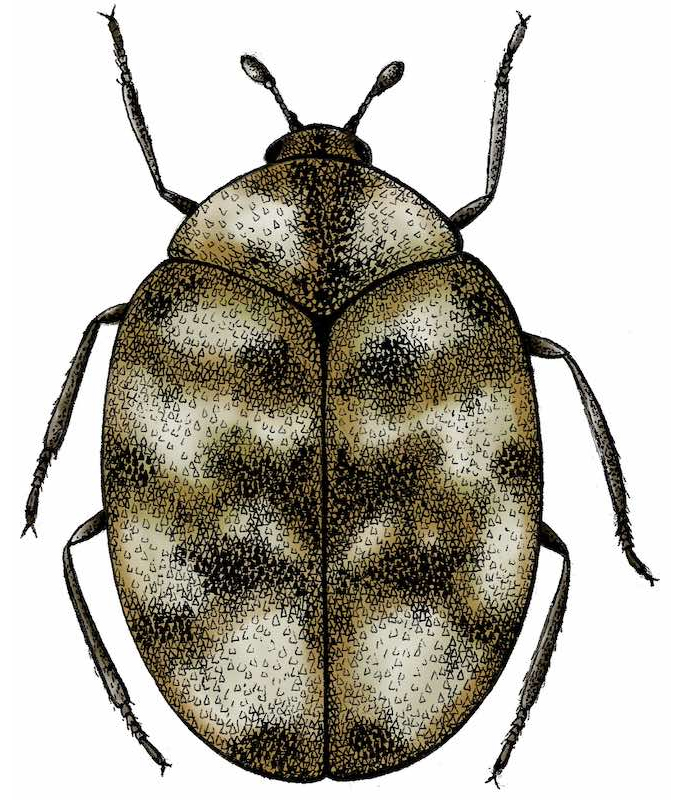
Varied Carpet Beetle (Anthrenus verbasci)
The Varied Carpet Beetle is one of the most frequently encountered carpet beetles in Britain.
Adults are small, rounded beetles, usually only a few millimetres long, with a mottled pattern of pale, brown, yellowish and dark scales on the wing cases.
Adult beetles are often associated with flowers and pollen outdoors, but they may also be seen indoors on windowsills as they move towards light.
The damaging stage is the larva. Carpet beetle larvae are brown and hairy or bristly and are commonly known as woolly bears.
The larvae feed on animal-derived material including wool, fur, feathers, skins, hair and dead insects.
For monitoring Anthrenus species such as the Varied Carpet Beetle, Historyonics supplies the Varied Carpet Beetle and Guernsey Carpet Beetle Lure and Museum Trap Kit.

Guernsey Carpet Beetle (Anthrenus sarnicus)
The Guernsey Carpet Beetle is another Anthrenus species associated with damage to vulnerable animal-based materials.
As with other carpet beetles, the adult beetle itself is not responsible for the characteristic textile damage. The larval stage causes the damage.
Larvae may remain concealed in cracks, under furniture, around carpet edges, in storage areas or amongst vulnerable collection material.
Correct identification is important because pheromone monitoring systems are species or genus specific.
Historyonics supplies an Anthrenus bullet lure and a complete lure and Museum Trap kit for monitoring Varied and Guernsey Carpet Beetles.
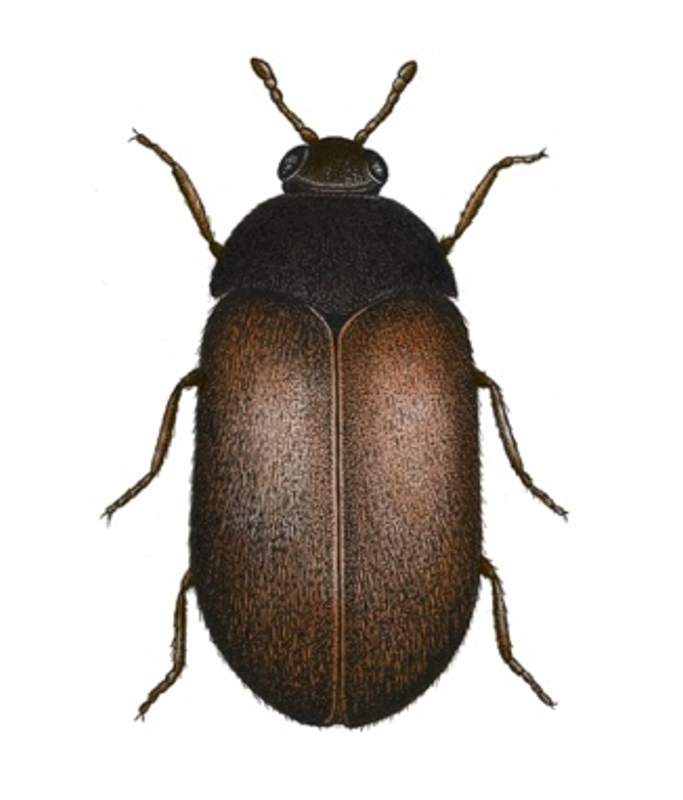
Fur Beetle / Two-Spot Carpet Beetle (Attagenus pellio)
The Fur Beetle, also known as the Two-Spot Carpet Beetle, looks different from the rounded Anthrenus carpet beetles but has similar feeding habits.
The larvae can attack wool textiles, carpets, fur, skins, feathers and other animal-based material.
Larvae may also survive on dead insects and organic debris accumulating in quiet or inaccessible spaces.
For situations where both Anthrenus and Attagenus species may be present, Historyonics supplies the AA Carpet Beetle Kit – Attagenus & Anthrenus.

Brown Carpet Beetle (Attagenus smirnovi)
The Brown Carpet Beetle is an Attagenus species that has become established in the UK and can occur in homes, museums and collections.
It can attack wool textiles, carpets, skin, fur and other suitable organic material.
Because different carpet beetle species can require different monitoring lures, identification should be made as accurately as possible before selecting a pheromone lure.
How to Spot a Carpet Beetle Infestation
The signs of carpet beetles can be easy to miss until damage has already occurred.
Carpet beetle larvae may attack:
- Wool and woollen clothing
- Wool carpets and rugs
- Fur
- Hair
- Feathers
- Leather and skins
- Taxidermy
- Natural history specimens
- Historic and ethnographic textiles
- Upholstery containing suitable natural fibres
- Dead insects in window voids, chimneys, lofts and collections
Damage is often more severe where material is soiled or where lint, hair and organic debris have accumulated.
Signs to Look For
Possible signs of a carpet beetle infestation include:
- Small neat or irregular holes in woollen garments and textiles
- Bare or grazed areas of wool carpets and rugs
- Brown, hairy or bristly larvae
- Discarded larval skins
- Adult beetles on windowsills
- Adults appearing around windows during spring and summer
- Larvae or cast skins underneath furniture or around carpet edges
- Damage to feathers, fur, skins, taxidermy or natural history specimens
Unlike clothes moth infestations, carpet beetle damage is normally not associated with silk webbing.
Carpet Beetles or Clothes Moths?
Carpet beetles and clothes moths can both damage wool, fur, feathers and other animal-derived materials, so the cause of damage is not always obvious at first.
Carpet beetle larvae are typically brown, hairy or bristly and may leave characteristic discarded larval skins around an infestation.
Clothes moth larvae are pale and may be associated with silk webbing, tunnels, frass or fibrous cases, depending on the moth species.
Fresh carpet beetle damage may appear as small holes or grazed areas without the silk webbing normally associated with clothes moth activity.
Correct identification is essential because monitoring lures and control measures should be targeted at the pest actually causing the damage.
Understanding the Carpet Beetle Life Cycle
Understanding the carpet beetle life cycle helps explain why infestations can persist even when only occasional adults are seen.
Adult carpet beetles may feed on pollen and nectar outdoors and can enter buildings through open windows or other openings.
Females lay eggs in places where newly hatched larvae will have access to suitable food.
The larvae then feed on vulnerable animal-based material and may remain hidden for extended periods.
As they grow, larvae moult repeatedly and leave behind cast larval skins, which are an important sign of infestation.
Eventually the larvae pupate and emerge as adult beetles.
It is the larval stage that causes damage to textiles and collections.
Seeing adult beetles does not necessarily show exactly where the damaging larvae are feeding, so inspection remains essential.
Where Do Carpet Beetles Hide?
If you are trying to find the source of a carpet beetle infestation, do not concentrate only on places where adult beetles have been seen.
Look for areas where larvae have access to food and are unlikely to be disturbed.
Start by inspecting:
- Carpet edges
- Under beds
- Under sofas and chairs
- Under wardrobes and other heavy furniture
- Underneath rugs
- Inside wardrobes and drawers
- Stored clothing
- Boxes of textiles
- Attics and roof spaces
- Unused chimneys
- Floorboard gaps and crevices
- Upholstered furniture
- Stored wool, fur and feather items
- Taxidermy and natural history specimens
- Areas containing dead insects
- Bird nesting sites around roofs, eaves and chimneys
Move furniture where practical and inspect areas that have not been cleaned or disturbed for some time.
With fitted wool carpets, pay particular attention to edges and areas underneath heavy furniture.
How Did Carpet Beetles Get Into Your Property?
Carpet beetles are widespread and an infestation can begin in several ways.
Adult beetles can enter through open doors and windows. Carpet and Fur Beetles are also associated with birds’ nests, and infestations can spread into buildings from nests in unused chimneys, roof voids, eaves or vegetation against walls.
Infested second-hand textiles, rugs, taxidermy, upholstered furniture or other objects can also introduce carpet beetles.
Once an infestation is established, the priority is to determine where the larvae are feeding and what is supporting them.
How to Monitor and Trap Carpet Beetles
Monitoring is an important part of carpet beetle management, particularly in museums, historic houses, archives, stores and collections.
Historyonics supplies both non-specific blunder traps and targeted lure systems for carpet beetles.
A monitoring trap should not be regarded as a complete treatment on its own. Traps help detect activity, identify hotspots and measure changes in a population while inspection, cleaning and treatment deal with the source of the infestation.
Monitoring Anthrenus Carpet Beetles
For Varied Carpet Beetles and Guernsey Carpet Beetles, Historyonics supplies the Varied Carpet Beetle and Guernsey Carpet Beetle Lure and Museum Trap Kit.
The pheromone lure is designed for Anthrenus species and is used with a sticky Museum Trap.
Historyonics recommends setting pheromone traps in spring, particularly around March to April, because adult beetles become more active into early summer.
A single lure is intended to cover a radius of approximately 5 metres.
Inspect traps regularly and replace the pheromone lure approximately every three months / 12 weeks. Replace the sticky trap sooner if dust or debris reduces the effectiveness of the glue.
Recommended product: Varied Carpet Beetle and Guernsey Carpet Beetle Lure and Museum Trap Kit
Monitoring Anthrenus and Attagenus Carpet Beetles
Where the species has not yet been confirmed, or where both Anthrenus and Attagenus species need to be monitored, Historyonics supplies the AA Carpet Beetle Kit.
The kit contains a Museum Trap and a bullet lure designed to attract adult male carpet beetles of the genera Anthrenus and Attagenus.
Correct identification remains important because pheromone lures work best when they are properly matched to the pest being monitored.
Recommended product: AA Carpet Beetle Kit – Attagenus & Anthrenus
Monitoring Larvae and Other Dermestid Beetles
Historyonics also supplies the Dermestid Beetle Kit, which uses a food-based attractant intended to detect both adults and larvae of dermestid beetles.
The attractant can be useful where monitoring needs to include carpet beetles and related dermestid pests rather than only adult males responding to a sex pheromone.
The Historyonics Dermestid Larval Monitor is specifically designed to help detect larval activity.
Recommended products: Dermestid Beetle Kit and Dermestid Larval Monitor
Using Blunder Traps to Help Locate an Infestation
The Historyonics Museum (Blunder) Trap is a non-specific sticky monitoring trap for crawling insects, including carpet beetles.
It can be used without a lure to detect insects moving through an area, or combined with an appropriate lure where a particular species or group is being targeted.
Historyonics also supplies the low-profile Insect Monitoring Floor Trap, which is useful for discrete monitoring under furniture and in areas with restricted access.
Keep records of:
- Where each trap is positioned
- When it was installed
- Which lure, if any, is being used
- Species or life stage caught
- Numbers caught
- When traps or lures are changed
Increasing catches in one location can help focus inspection on nearby carpets, objects, furniture or structural voids.
How to Get Rid of Carpet Beetles
Once carpet beetle activity has been identified, take a systematic approach.
Simply killing visible adult beetles is unlikely to solve the problem if larvae, cast skins, food sources and harbourages remain elsewhere.
Step 1: Inspect Vulnerable Material
Inspect wool clothing, carpets, rugs, upholstery, fur, feathers, taxidermy, natural history specimens and other susceptible material.
Do not restrict inspection to the object where damage was first noticed. Check neighbouring objects and surrounding areas.
Look for:
- Hairy or bristly larvae
- Discarded larval skins
- Fresh holes or grazing
- Adult beetles
- Dead insects or other organic material supporting larvae
- Bird nesting material where relevant
Separate potentially infested material from unaffected items where practical.
Step 2: Find and Remove the Source
Carpet beetle management is much more effective when the source of the infestation is located.
Possible sources include:
- Infested wool carpets or rugs
- Stored textiles
- Taxidermy or natural history material
- Dead insects accumulating in lofts, window voids or light fittings
- Bird nests in roof spaces, chimneys or eaves
- Animal hair, lint and organic debris beneath furniture
Any bird nest removal should be carried out lawfully and only when the nest is no longer active. Consider professional advice where access or wildlife legislation may be relevant.
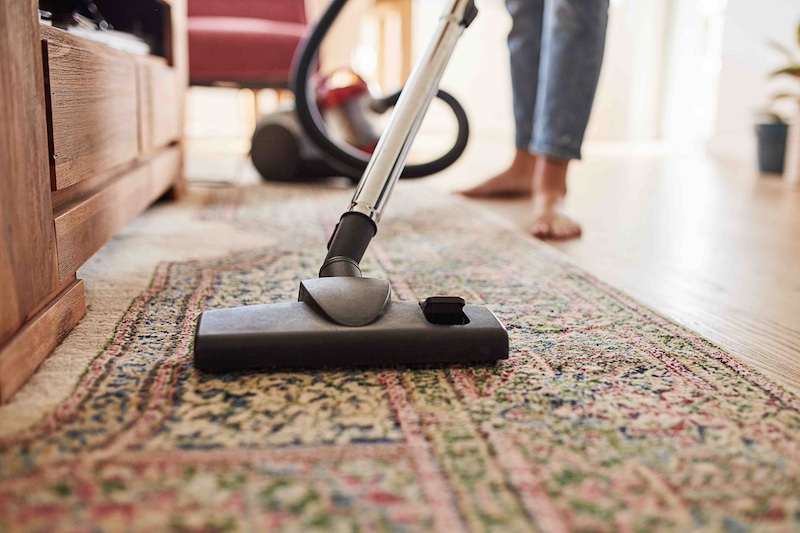
Step 3: Vacuum Thoroughly
Good housekeeping is one of the most important elements of carpet beetle management.
Vacuum:
- Carpets and rugs
- Carpet edges
- Beneath beds, sofas and wardrobes
- Upholstered furniture
- Wardrobes and storage areas
- Cracks and crevices
- Skirting edges
- Areas containing hair, lint, dead insects or other debris
Pay particular attention to dark, undisturbed areas where larvae can remain concealed.
After vacuuming an infested area, remove and dispose of the collected material promptly so that surviving larvae are not left inside the property.
Treating Carpet Beetle Larvae and Infested Areas
Cleaning and treating the places in which larvae are active is essential.
Historyonics Constrain® is a water-based insecticide spray designed for the control of flying and crawling insect pests, including carpet beetles. It is intended for use in domestic properties as well as historic, artistic and scientific collections.
A light spray can be applied to appropriate areas such as:
- Carpet edges and skirtings
- Undersides of rugs
- Inside wardrobes and drawers with contents removed
- Between floorboards where gaps exist
- Hidden areas behind or underneath furniture
- Other suitable surfaces where larvae have been active
Always follow the current product label and Historyonics instructions.
With delicate or valuable surfaces, test an inconspicuous area first and consider conservation requirements before treatment.
Allow treated surfaces to dry before reuse and avoid immediately vacuuming the residual deposit away.
Recommended product: Constrain®
Can You Freeze Carpet Beetles?
Freezing can be an effective physical treatment for suitable infested objects and textiles, particularly where insecticide treatment is undesirable.
The object should be appropriately sealed before freezing to control moisture and prevent insects escaping.
The exact freezing regime should be chosen according to the object, the pest and the conservation requirements of the material.
Historic, composite, painted, wet, fragile or otherwise sensitive objects may not be suitable for freezing, so seek conservation advice where necessary.
Washing or Heat-Treating Suitable Textiles
Where a textile can safely tolerate laundering or heat treatment, this may help eliminate carpet beetle eggs and larvae from the item.
Always follow the garment or textile care instructions.
Do not subject valuable, historic or delicate material to heat or washing unless you know the material can safely tolerate the treatment.
Treating Voids and Inaccessible Areas
Carpet beetle larvae can survive in dry, inaccessible spaces where hair, fibres, dead insects and other organic debris have accumulated.
This can include gaps beneath floors, behind skirtings, under fitted units and other voids.
For appropriate dry locations, InsectoSec® Powder provides an insecticide-free diatomaceous earth treatment that can be effective against carpet beetles and other crawling insects.
InsectoSec should be used only in accordance with its current label and product instructions and in locations where a dry powder treatment is appropriate.
Recommended product: InsectoSec® Powder
Space Treatments for Carpet Beetles
A space treatment may sometimes be used as part of a broader pest management programme where exposed adult insects need to be reduced.
However, a room treatment should not be expected to reach every concealed carpet beetle larva beneath furniture, inside stored materials or within structural voids.
For that reason, any space treatment should be combined with inspection, cleaning, monitoring and treatment of the actual larval harbourages.
Always read and follow the current product label and safety instructions before using any pesticide or space treatment.
Protecting Collections and Textiles After Treatment
Once an infestation has been brought under control, avoid returning vulnerable material to the same conditions that allowed carpet beetles to become established.
Clean and inspect objects before placing them into long-term storage.
Where appropriate, use clean, pest-resistant containers or suitable protective packaging.
Keep storage areas accessible for inspection and avoid allowing excessive lint, dust, dead insects or animal hair to accumulate.
Continue monitoring so that new activity can be detected before serious damage occurs.
How to Prevent Carpet Beetles Coming Back
Prevention should be considered part of carpet beetle management rather than something that begins only after treatment has finished.
Reduce Undisturbed Material
Large quantities of textiles, specimens and stored material that are rarely moved can provide concealed feeding sites.
Regularly inspect vulnerable objects and ensure that storage areas can be cleaned effectively.
Keep Areas Clean
Regularly remove dust, lint, animal hair, dead insects and other organic debris that may support carpet beetle larvae.
Pay special attention to areas beneath furniture, around skirting boards, inside cupboards and at carpet edges.
Inspect Vulnerable Objects
Look for larvae, cast skins and fresh damage when handling wool, fur, feathers, taxidermy, textiles and natural history specimens.
Inspect Second-Hand and Incoming Items
Antique rugs, vintage textiles, upholstered furniture, taxidermy, natural history material and other second-hand objects can potentially introduce carpet beetles.
Inspect new acquisitions before placing them alongside an existing collection or within a clean storage area.
Check for Bird Nests
Carpet and Fur Beetles are frequently associated with birds’ nests.
Check unused chimneys, roof voids, eaves and other potential nesting locations if carpet beetles repeatedly appear in upper floors or roof areas.
Never disturb an active nest unlawfully; deal with old nesting material only when it is legal and appropriate to do so.
Monitor Regularly
Use appropriately positioned Museum Traps, floor traps, pheromone lures or dermestid attractants to identify new activity.
Routine monitoring is particularly valuable in museums, historic houses and collections because it allows a developing problem to be detected before extensive damage occurs.
Managing Carpet Beetles Using Integrated Pest Management
The most effective approach to a persistent carpet beetle problem is not simply to keep applying insecticide.
Historyonics promotes Integrated Pest Management (IPM) — combining identification, monitoring, housekeeping, physical treatments, targeted control and prevention.
For carpet beetles, this means:
Identify – Establish which beetle is responsible and distinguish carpet beetle damage from clothes moth damage.
Inspect – Find vulnerable materials, larval harbourages, cast skins and likely food sources.
Monitor – Use an appropriate system such as the Museum Trap, Anthrenus lure and trap kit, AA Carpet Beetle Kit or Dermestid Beetle Kit.
Clean – Remove dust, hair, lint, dead insects, larvae, cast skins and other debris.
Treat – Use suitable physical treatments or appropriately targeted products such as Constrain® or InsectoSec® where necessary.
Protect – Return clean objects to suitable storage and remove conditions that encourage reinfestation.
Monitor again – Continue checking traps and vulnerable areas to make sure activity is declining.
This approach helps focus treatment where it is genuinely needed and reduces unnecessary pesticide use.
Frequently Asked Questions About Carpet Beetles
What do carpet beetles look like?
Adult carpet beetles vary according to species. Anthrenus species are generally small, rounded beetles with patterned or mottled scales, while Attagenus species have a more elongated beetle shape.
What do carpet beetle larvae look like?
Carpet beetle larvae are usually brown and noticeably hairy or bristly. They are often called woolly bears. Cast larval skins may be found close to infested material.
Do adult carpet beetles damage carpets and clothes?
No. The characteristic damage to wool, fur, feathers and other vulnerable materials is caused by the larvae, not the adult beetles.
Where should I look for carpet beetle larvae?
Check carpet edges, underneath furniture, wardrobes, drawers, stored textiles, lofts, old bird nesting sites, floorboard gaps, taxidermy, natural history specimens and areas where dead insects or organic debris accumulate.
What materials do carpet beetles attack?
Larvae particularly attack animal-derived materials such as wool, fur, feathers, hair, skins and leather. They can also feed on dead insects and other suitable organic material.
How can I tell carpet beetle damage from clothes moth damage?
Carpet beetle larvae are brown and hairy and often leave cast skins. Clothes moth larvae are pale and may produce silk webbing, tunnels or cases. Carpet beetle damage is generally not associated with silk webbing.
Do carpet beetle traps get rid of an infestation?
Monitoring traps are extremely useful for detecting activity, helping to identify the species and locating hotspots, but they should usually form part of a broader programme of inspection, cleaning and treatment.
Which carpet beetle trap should I use?
For Varied and Guernsey Carpet Beetles, Historyonics supplies an Anthrenus-specific lure and trap kit. Where both Anthrenus and Attagenus species need to be monitored, the AA Carpet Beetle Kit may be more appropriate. Non-specific Museum Traps and dermestid attractants are also available.
How often should carpet beetle pheromone lures be replaced?
Historyonics advises changing its carpet beetle bullet lures approximately every three months / 12 weeks once in use, and replacing sticky traps sooner if the glue becomes contaminated with dust or debris.
When should carpet beetle pheromone traps be put out?
Historyonics recommends setting pheromone traps in spring, particularly around March to April, ahead of increased adult activity in early summer.
Can carpet beetles come from birds’ nests?
Yes. Carpet and Fur Beetles are commonly associated with birds’ nests. Old nests in chimneys, roof voids and eaves can act as a source from which beetles spread into a building.
Why do carpet beetles keep coming back?
Larvae may remain concealed in quiet areas with a continuing food source, and new adults may also enter from outdoors or from old nesting sites. Persistent problems therefore require source identification, cleaning, treatment where appropriate and continued monitoring.
Need Help With Carpet Beetles?
The key to managing carpet beetles is to identify, inspect, monitor, clean, treat and prevent.
Do not concentrate solely on the adult beetles you can see. Finding where larvae are feeding and removing the material and conditions that allow them to survive is essential for long-term carpet beetle control.
Historyonics supplies specialist products for carpet beetle identification, monitoring and treatment, including:
-
Varied Carpet Beetle and Guernsey Carpet Beetle Lure and Museum Trap Kit – targeted monitoring for Anthrenus species
-
AA Carpet Beetle Kit – for monitoring Attagenus and Anthrenus species
-
Dermestid Beetle Kit – food-attractant monitoring for dermestid adults and larvae
-
Dermestid Larval Monitor – for detecting larval activity
-
Museum (Blunder) Trap – non-specific sticky monitoring for crawling insects
-
Insect Monitoring Floor Trap – low-profile monitoring in discreet or confined locations
-
Constrain® – residual treatment for appropriate surfaces and harbourages
-
InsectoSec® Powder – diatomaceous earth treatment for suitable dry areas
If you’re unsure which carpet beetle species you have, which monitoring system you require or which treatment is appropriate, contact Historyonics for advice.